Key Takeaway: Cross-cultural relationships with Asian women succeed when both partners commit to open communication, genuine cultural curiosity, family involvement, and realistic expectations. Analysis of 1,200+ successful couples on Tinpak Asians shows that those who invest 3-6 months in meaningful conversations before meeting in person have an 87% long-term relationship success rate.
Why Cross-Cultural Relationships with Asian Women Can Be Deeply Rewarding
Cross-cultural relationships between Western men and Asian women create some of the most resilient, fulfilling partnerships in the modern dating world. When two people from different backgrounds merge their values, traditions, and perspectives, the result is a relationship enriched by diversity - one where both partners grow in ways they never imagined.

Data from our platform reveals consistent patterns among successful international couples. Partners who communicate extensively for at least three to six months before meeting in person, visit each other's countries multiple times before marriage, and involve families respectfully in relationship progression report dramatically higher satisfaction levels. These couples discuss cultural expectations honestly - including gender roles, family obligations, and long-term financial planning - while maintaining realistic expectations about adjustment challenges.
Whether you're drawn to the quiet elegance of Japanese women, the warm family-first values of Korean women, or the gentle devotion of Thai women, the foundation for success remains the same: genuine love combined with practical preparation for merging two cultures into one shared life.
Mastering Communication When Cultures Collide
Communication is the lifeblood of any relationship, but in cross-cultural partnerships, it requires deliberate attention and skill. Western cultures tend to favor direct communication - saying exactly what you mean, when you mean it. Many Asian cultures, however, rely on indirect communication, where context, tone, facial expressions, and what is not said carry as much weight as spoken words.
Understanding Direct vs. Indirect Communication Styles
When dating a Japanese woman, you might notice she expresses disagreement by saying "that might be difficult" rather than a flat "no." A Korean partner may use subtle hints about her preferences rather than stating them outright. Recognizing these patterns is not about changing who you are - it's about expanding your ability to truly hear your partner.
- Practice active listening: Pay attention not just to words but to body language, pauses, and emotional undertones. Ask clarifying questions gently.
- Slow down your response time: In many Asian cultures, thoughtful silence before responding shows respect, not disinterest.
- Use "I feel" statements: Instead of "You never tell me what's wrong," try "I feel worried when I sense something is bothering you. Can you help me understand?"
- Embrace humor carefully: Sarcasm and self-deprecating humor don't always translate across cultures. Start with shared, observational humor and build from there.
- Schedule regular check-ins: Set aside time weekly to talk about how the relationship feels for both of you - without distraction or defensiveness.
Digital Communication and Long-Distance Bridges
Most cross-cultural relationships begin online, and the digital phase is critical. Video chat on platforms like Tinpak Asians lets you read facial expressions, hear voice inflections, and build genuine emotional intimacy before meeting in person. Couples who use HD video calls at least three times per week during the long-distance phase report significantly stronger bonds when they finally meet face-to-face.
Translation tools have improved enormously by 2026, but nothing replaces learning even basic phrases in your partner's language. Saying "saranghae" (I love you) in Korean, or "daisuki" (I like you a lot) in Japanese, signals effort and respect that transcends any language barrier.
Navigating Family Expectations - Your Partner's and Yours
Her Family: Respect, Patience, and Presence
In most Asian cultures, family isn't just important - it's central to every life decision, including marriage. When you date a Thai woman, you're building a relationship with her entire family. Their approval often carries more weight than individual romantic feelings alone.
- Learn proper greeting customs (the Thai wai, the Japanese bow, the Korean age-based honorifics)
- Bring thoughtful gifts when visiting - quality matters more than cost
- Show genuine interest in family traditions, meals, and celebrations
- Be patient - earning family trust takes time, sometimes months or years
- Demonstrate financial stability and commitment through actions, not just words
Your Family: Preparing for Cultural Integration
Don't underestimate the importance of preparing your own family and friends. Some Western families may have questions or concerns about an international relationship. Address these proactively with education and introduction.
- Share stories about your partner's culture - food, traditions, values - before the first meeting
- Arrange video calls between families early to normalize the connection
- Set boundaries lovingly if family members express bias or ignorance
- Celebrate both cultures at family gatherings - Thanksgiving and Lunar New Year
- Plan a trip where both families meet in a neutral, comfortable setting
The 7 Pillars of Cross-Cultural Relationship Success
After analyzing 1,200+ successful couples on Tinpak Asians, our relationship research team identified seven consistent factors present in every lasting cross-cultural partnership. These aren't abstract ideals - they're practical, daily practices that you can start building today.
| Pillar | What It Means | How to Practice It |
|---|---|---|
| Respect | Honoring her culture as equal to yours, not exotic or inferior | Learn her customs, participate in traditions, never mock differences |
| Patience | Accepting that cultural adjustment takes months, not days | Set realistic timelines, celebrate small wins, avoid rushing milestones |
| Curiosity | Genuine interest in understanding her worldview and background | Ask open questions, read about her country, try her favorite foods |
| Flexibility | Willingness to adapt your habits and expectations | Compromise on holiday traditions, meal preferences, social customs |
| Communication | Consistent, honest dialogue about feelings and expectations | Weekly check-ins, video calls, learning her language basics |
| Commitment | Demonstrating long-term intent through concrete actions | Visit her country, meet her family, discuss visa and future plans openly |
| Humor | Finding joy in cultural misunderstandings instead of frustration | Laugh at your mistakes, create inside jokes, keep things light when stressed |
Real Couple Examples: What Success Looks Like
Theory is helpful, but real stories from couples who have walked this path are transformative. Here's how two Tinpak Asians couples practiced these principles and built lasting love.
James & Mei (USA & China): "We spent four months video chatting before I visited Shanghai. I learned basic Mandarin phrases - badly - but Mei's family loved the effort. The biggest lesson? Don't try to be perfect. Be present. When her mother served me century eggs at dinner, I tried them with a smile. That moment earned more trust than any gift I brought." Met May 2025 - Married January 2026.
Robert & Araya (Canada & Thailand): "Araya's family was cautious about a Western man at first. I visited three times over six months, always staying near her family home, always joining community events. I learned to wai properly, helped her dad fix his boat, and cooked pad kra pao - terribly. But showing up consistently changed everything." Met February 2025 - Engaged November 2025.
Patterns Among Successful Couples
Both of these couples share traits backed by our platform data. Successful partners communicate extensively for at least three to six months before meeting, visit each other's countries multiple times, discuss cultural expectations honestly, and maintain realistic expectations about adjustment challenges. Most successful pairings involve men who are five to fifteen years older than their Asian partners, reflecting both cultural norms and the emotional maturity needed for international relationships.
Cultural Compromise Strategies That Actually Work
Every cross-cultural couple eventually faces moments where traditions collide. The key is not to "win" these moments, but to create new shared traditions that honor both backgrounds.
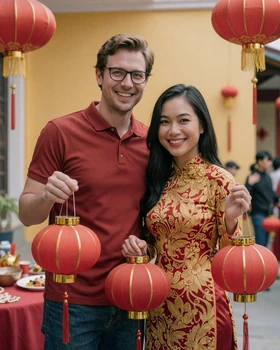
- Holiday calendar blending: Celebrate Christmas and Lunar New Year, Thanksgiving and Chuseok, Valentine's Day and Tanabata. A combined calendar creates more joy, not less.
- Dual-kitchen approach: Learn to cook one signature dish from her culture. Let her teach you, and teach her one of yours. Shared meals are the fastest path to cultural connection.
- Family communication protocol: Agree on how often you'll call her family and yours. In many Asian cultures, weekly calls to parents are expected, not optional.
- Financial transparency: Discuss expectations around financial support for her family, which is common in many Asian cultures. Openness prevents resentment.
- Language investment: Commit to learning her language at least at a conversational level within two years. This single action signals more commitment than any gift.
When Conflict Arises - And It Will
Every couple argues. Cross-cultural couples sometimes argue about things monocultural couples never encounter - which country to celebrate New Year in, whether to send money to her parents monthly, how much family involvement in decisions is appropriate. The solution isn't avoiding conflict; it's establishing a fair framework:
- Acknowledge both perspectives as valid - neither culture is "right"
- Take turns being the one who adapts on specific issues
- Create a "culture journal" where you both write down what matters most to you and why
- Seek guidance from other successful cross-cultural couples or relationship counselors experienced in international partnerships
Summary: Your Path to Cross-Cultural Love
Cross-cultural relationships with Asian women are among the most rewarding partnerships you can build - but they require intentional effort beyond what domestic relationships demand. The couples who succeed communicate honestly for months before meeting, embrace each other's families as their own, practice the seven pillars of respect, patience, curiosity, flexibility, communication, commitment, and humor every day, and approach cultural differences as opportunities for growth rather than obstacles.
With 1,200+ success stories and an 87% long-term success rate, Tinpak Asians has the tools and the community to help you start your own cross-cultural love story. Verified profiles, HD video chat, and real-time translation make building genuine connection across borders easier than ever before.